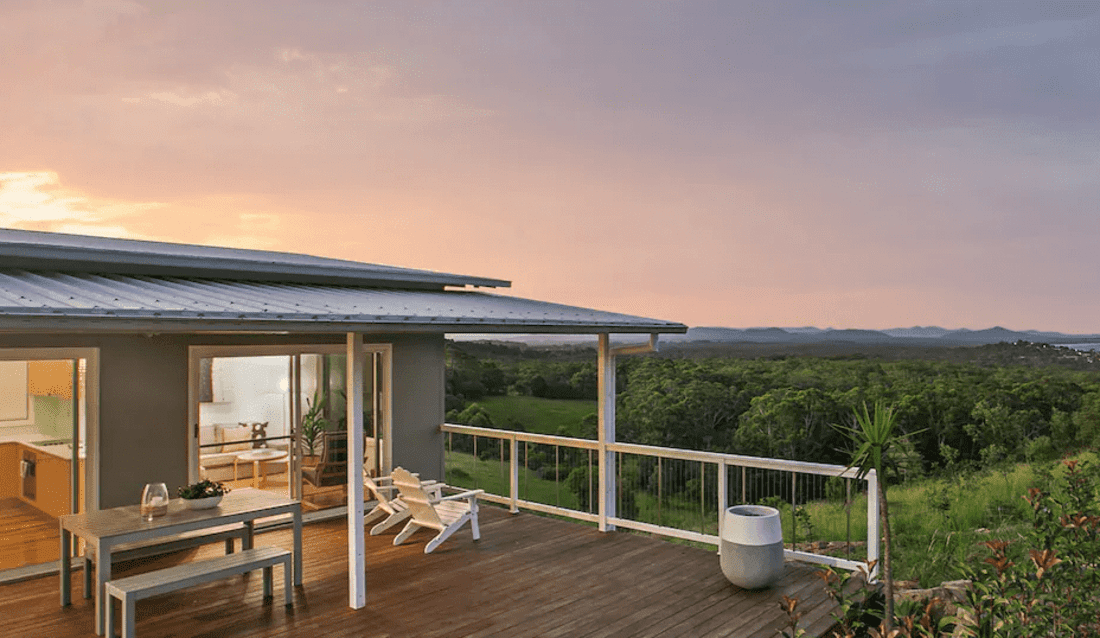
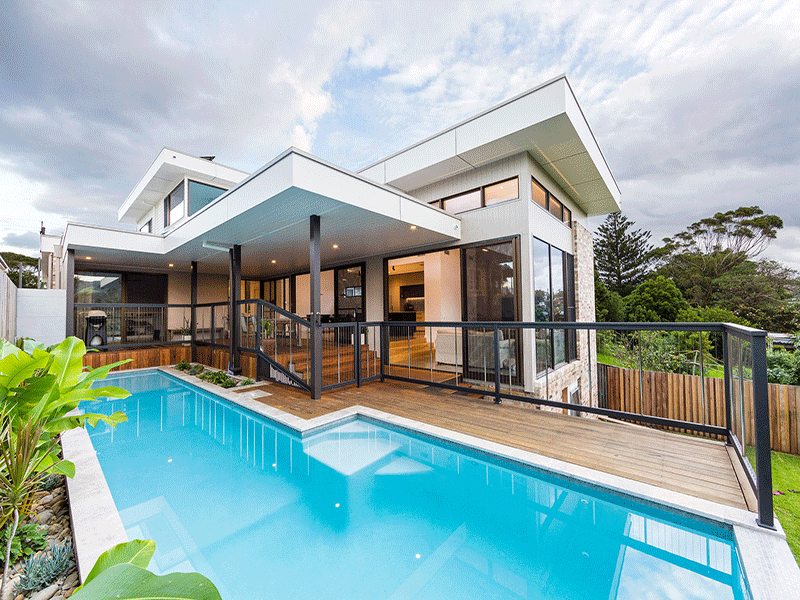
Sentrel Australia Vertical Cable Balustrade and Pool Fencing has just been awarded ‘Best New Product – Architectural External & Structural Products’ at this year’s Melbourne DesignEX. Australia’s leading design and architecture event presents the best in contemporary and classic designs. This trade-only event has been at the forefront of the design and architectural arena for over 20 years.
Sentrel’s designer, Brett Harrison, was unable receive the award, which was accepted on his behalf by Louise Scott, who was in Melbourne as part of Sentrel’s Sales and Marketing team. Interior designer and executive sales manager Jennifer Fair is delighted with the honour, reflecting that a great deal of hard work had gone on behind the scenes to get the product to the show. ‘In a product like pool fencing and balustrade, complying with Australian Standards is essential. The testing is rigorous. Engineer certification and quality craftsmanship are essential to us. We made it through the process and the design is still stunning! We love it’.
Jen and her partner Bob Acton, from Byron Bay, first came into contact with Sentrel Australia by entering and winning a competition for
$6,000 of Sentrel’s Pool Fencing in 2009. Bob is a building designer,
so between them there were a few ‘lively conversations’ about which way
to go for pool fencing. Glass was good-looking but needed cleaning and
didn’t let the breezes through, steel didn’t offer any kind of visual
appeal to them as designers and horizontal cable balustrade has never
been legal for pools. They loved the vertical cable Sentrel Australia product so
much they became partners in Sentrel Australia Australia and are taking the
business around the country with their enthusiasm and expertise.
Jarrod Butlin of Bago Woodworks in
Wauchope, manufactures the product, and is also a Director of the
company. Bago Woodworks is renowned for their quality craftsmanship and
attention to detail, and have been building fine furniture for years.
The ‘Best Product’ award to Sentrel Australia Australia is a testament to small
business success in our state, combining the talents and skills of a
design, manufacturing and sales team across 3 regional areas in New
South Wales producing an Australian-made product using Australian
hardwoods. Congratulations to Sentrel!
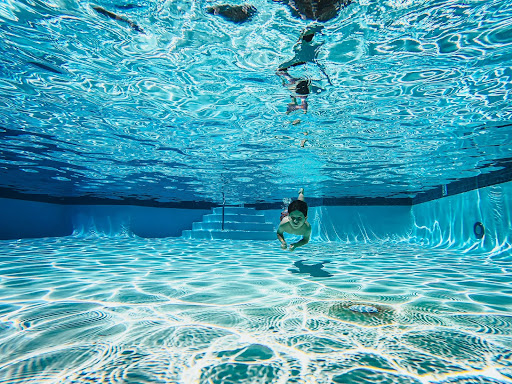
Swimming is considered an essential life skill. Aside from being one of the most important survival skills, it is also a sport, means of exercise, and a fun recreational activity that is most common during the summer.
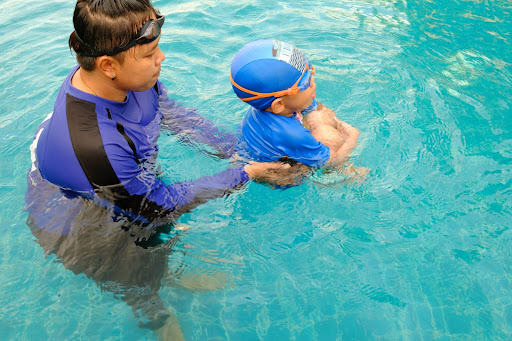
Most parents opt to have their children take swimming lessons early because of its many benefits. Learning to swim at a young age enhances gross motor skill development and coordination promotes flexibility and increases self-confidence and self-esteem.
In the process of learning how to swim, children develop their physical skills and their cognitive and socio-emotional skills. Learning to swim at an early age has many benefits for your child. With this, it is also necessary to ensure your child’s safety when swimming in a pool. This article will dive into the basics of building a safe swimming pool for children. Next, it will discuss the importance of water safety and how it can help children avoid swimming pool accidents. Lastly, it will provide you with a basic swimming pool safety checklist that will help you maintain a safe swimming pool area for your child. This safety checklist is universally applied wherever you are in the world.
The Basics of Building a Safe Swimming Pool for Children
Owning your private swimming pool comes with numerous responsibilities that help protect your family, especially your children. Ensuring the safety of your child when swimming should be your priority. When building your swimming pool, begin by ensuring that the swimming pool and the area are equipped with facilities that guarantee children’s safety.
Swimming pool accidents can be reduced when precautions regarding swimming pool safety are established. If you are interested in building your swimming pool in your backyard, here are some factors that can help ensure your children’s safety:
Fencing – The swimming pool should have safety barriers, such as regularly maintained fences, that keep young children from accessing the pool. These fences can be made of any material if there are no significant gaps and children cannot climb.
Filtration – Your swimming pool should have a water recirculation and filtration system that complies with your area’s legislation regarding swimming pools. This reduces the risk of injuries such as suction entrapment.
Maintenance – Swimming pool safety features should be monitored and maintained regularly to ensure all features are functioning correctly at all times. Another required safety feature is a self-closing gate, which should also be regularly maintained.
How Basic Water Safety can help Children Avoid Swimming Pool Accidents
Swimming pool accidents such as slips and falls, pool toy entrapment, and drowning may occur when water safety guidelines are not followed. These accidents can lead to serious injuries such as head injuries, broken bones, and even death. Here are three basic water and swimming safety guidelines that can help you and your children avoid swimming pool accidents:
Children should be constantly supervised and are highly encouraged to swim with other adults around.
Remind children to always ask permission before going near the water.
Adults supervising children are highly recommended to stay in arm’s reach of children.
Colour: Elements Magnatite
How to Check if Your Swimming Pool is Safe with a Pool Safety Checklist
Already have a swimming pool of your own and are not sure if it meets the basic safety measures needed to keep your children safe? Here is a checklist that can help you assess how safe your swimming pool is:
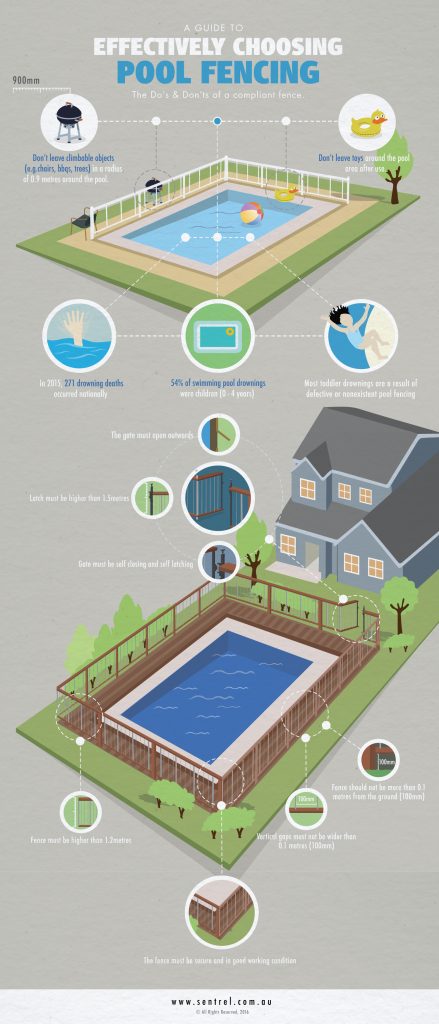
Young children should not be able to climb over, under, or through the fence to get to the pool. Swimming pool fences are usually required to be at a 1.2m high and 1.8m for boundary fences.
All the gates in your pool safety barrier should close and latch properly, and should be self-closing and self-latching so that young children cannot easily open them.
Children should not be able to access the swimming pool through a window in your house.
The pool should be clear of toys and other floating objects that could attract children to the water. When not in use, keep them out of the pool.
Objects that could be used for climbing over a pool safety barrier like toys, outdoor furniture, ladders, and those of the likes, should be kept far away from the safety barriers.
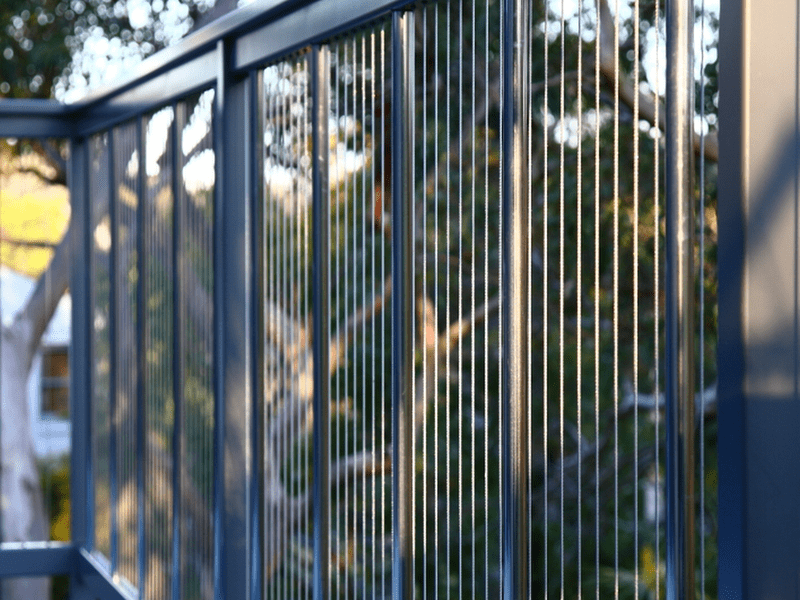
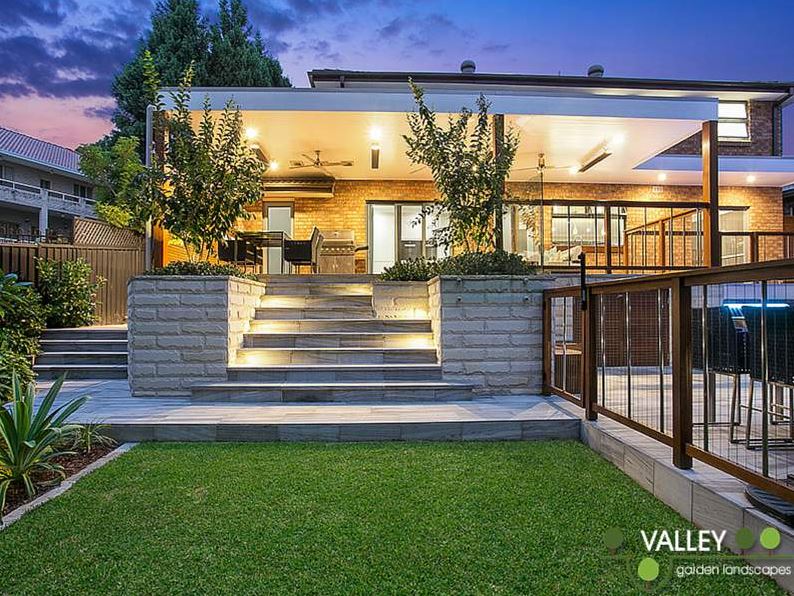
Thinking of ways to help make your swimming pool at home safer for your children? Let Sentrel Australia help you with that! Sentrel Australia manufactures a range of vertically tensioned cable balustrades and pool fencing. These fences incorporate a sensitive yet functional combination of marine-grade stainless steel and beautiful hardwood rails or aluminium rails in a range of modern colours. The options available to pool owners allow you to have a stylish look while having the most sophisticated safety features.
This month, we thought we’d adventure into new territory: an
interview with Sentrel’s Director, designer and inventor, Brett
Harrison. We’re discussing one of the (many) unique features of our
newest product, the aluminium balustrade system.
What makes this system so unusual is how it is all held onto your deck – with adhesives!
The latest technology, adhesives are used in many engineering
applications, including the vehicle and aircraft industries. Think about
that the next time you are flying at 35,000 feet in the Boeing 787
Dreamliner. Listen to the interview to learn just how sophisticated this
technology is, and how it works to hold your balustrade onto your deck
well into the next century.
Last month, our blog was on the subject of ‘Compliance and Safety’, and we examined the continuing deaths of young children in backyard pools despite rigorous safety measures and legislation.
We wanted to explore how you felt about where the responsibility for
childhood drowning lies, so that we can create some dialogue and
awareness around this subject.
Of course, we are pledged to helping prevent deaths, and our products reflect our stringent standards and commitment to safety and quality. However, statistics have shown that although Australia leads the world in pool safety legislation, the incidence of childhood drowning hasn’t altered appreciably in the last 10 – 15 years. Whether children are scaling the fences, pushing furniture to the fence and climbing up, or – unbelievably – pool gates are being left open, the reality is that a pool fence is a secondary line of defence against a child drowning.
We pushed our post out to more than 22,000 people from our Facebook Page to generate comments and gather your thoughts. Here is the post, including the comments that you responded with:
• If kids want to get over they will, no matter what. It comes down to adult supervision full stop. • Discipline is essential … children not allowed near the pool, NO questions asked. • Extra safety measures – putting a bike lock around the entrance to the gate, move stuff away from the fence, pool covers. • Lock all the doors and windows. • Safety covers. • Make fences higher … 1.8m with flat surface slippery so no grip. And nothing to grab to pull themselves up. • Videos around the pool scanning the fence and gates. • A motion alarm around a pool.
The overwhelming consensus was agreement in the basic principles we
believe so strongly in. Responsible supervision is the most important
factor in ensuring safety for everyone, even older children and young
adults, who sometimes slip off for a wee drink. (Did you know that the
second group most in danger of drowning is young men?).
Discipline and training help children understand the boundaries (not
just physical) that parents expect of them. Even young children can
start to understand these, especially if they are consistent and clear
from the outset.
Swimming lessons were another obvious consideration, and no doubt
could help prolong a younger child’s ability to stay afloat when in
difficulty. Flotation devices were discussed, and although these are
great in assisting any child, an adult needs to fit them first – which
implies that they are aware that their child is heading into the pool.
Alarms and motion detectors were suggested. It is imperative that
these are considered not as monitoring devices for when the kids are
swimming, but as alerts if the kids aren’t supposed to be outside but
have somehow made their way into the pool area. However, a toddler can
drown silently in seconds, so video surveillance may not prove a
reliable back-up at all.
Pool covers were suggested, and implemented, by several people.
However, another contributor found their child trapped under a pool
cover that was not properly fitted.
Fully compliant, functional and properly-used pool fencing is an
obvious defence against drowning. We know that. But vigilance and
communication with everyone responsible for the welfare of our families
is critical.
Swimming pools are a reality in our modern, affluent society – more
so every day. We must try to take every precaution we can think of to
protect our children, and never take our eyes off them around water. We
hope that this article has been helpful in generating discussion about
possible preventative measures that we can put in place to prevent
drowning.
At Sentrel, we are constantly fine-tuning our designs and products
with a view to making them the absolute best that we possibly can.
After releasing our powder-coated, aluminium balustrade and pool fencing just over 2 years ago, we wanted to come up with a solution for stair panels that worked seamlessly with the balustrade. It needed to be easy to manufacture, simple to install, and therefore keep the costs down for our customers.
After more than 2 years of design, creating prototypes and exhaustive
testing, we are now thrilled to introduce a revolutionary product that
we are incredibly proud of!
Our beautiful powder-coated flexible raked panel for stair balustrade has made installation of stair panels incredibly simple and cost-effective. By developing a unique stainless steel ‘knuckle’ located at either end of each panel, the entire unit can be raked easily to the angle of the stairs. The cables remain vertical and completely compliant. The knuckle is made from grade 316 stainless steel, which has outstanding corrosion resistance, particularly to pitting corrosion in chloride environments.
This makes designing a specific panel exactly for each job
unnecessary, saving costs for you, and installation becomes very
straightforward for your builder. Of course, the entire system matches
the durability, strength and compliance that you have come to expect
from Sentrel.
Our powder-coated aluminium stair panels can be ordered in a range of premiumcolours. Our vision is to introduce anodised aluminium products into our range in the near future…we’ll keep you posted!
If you have any other questions, contact Sentrel Australia and we can help. Email us at jen@sentrelaustralia.com.au or complete our online enquiry form.
With drownings continuing to threaten our youngest population and their families, Sentrel Australia want to help educate people on the importance of adequate pool fencing. We have designed our pool fences to meet Australian government requirements, and encourage families to learn how they can prevent risk of these fatal accidents.
Whether you are redesigning an area of your home or building from scratch, balustrades are a consideration that must be factored in. Aside from meeting the necessary building regulations, balustrades can also be a standout feature and help add to the character of your home. We have some tips you should consider before purchasing a balustrade for your home, to ensure you will be happy with the end result.
The Space
Perhaps the most important consideration is where you will be adding the balustrades. Is it inside or outside? If it is outside, environmentally resilient materials are crucial. Think high grade stainless steel or aluminium products that are durable to varying weather conditions. If you live by the coast there are additional considerations, so check this article out. If you are opting for privacy outside and you don’t mind forfeiting a breeze, then you may prefer a more solid structure balustrade system.
Is it adjoining a narrow space like a small balcony or staircase? Working with a small space means that every inch is important. Wire and glass balustrades can to be space savers. These areas also tend to be places people put their hands frequently. Aaron Beattie, Director at HHH Architects tells us “We like to use timber in these areas as it feels nicer to touch than say metal”. The combination of vertical wire balustrades and a timber handrail is great for these high traffic areas, as you also avoid dirty hand prints that you can expect to see on glass.
Aesthetics
Think about what you want to achieve by adding a balustrade system to your home. Is it purely to satisfy the building requirements your home? Do you have safety concerns for your children or pets? Once you have addressed the requisite questions, it’s time to consider how the balustrades will flow with the rest of your space.
Glass balustrades are aesthetically pleasing as they let a lot of light into the area and are great for a contemporary design. Although bear in mind that glass can encourage heat into the area and can be difficult to keep clean, especially if you have children.
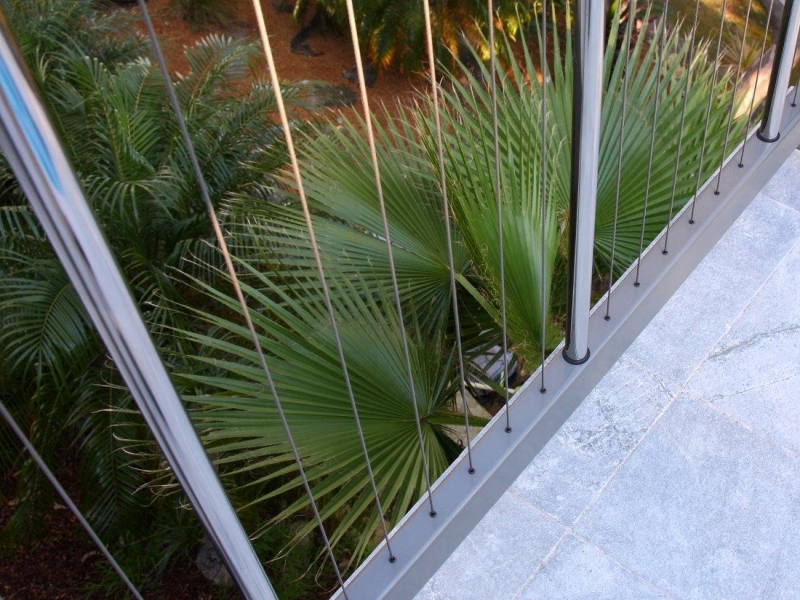
Stainless Steel Wire Balustrades allow for a lot of customising which is appealing for many households. If you have a colour scheme, often the handrails can be powder coated to meet your design and colour requirements. Wire balustrades also allow rooms to flow together, which means more ventilation and light through the home. And because they don’t obstruct views, they are a great option for balconies or upstairs areas of the home. Vertical wire tends to be the best option as horizontal wire balustrades present many safety and legal issues.
Australian hardwood handrails can be a great addition to any balustrade design. This organic material adds a lovely homely feel by carrying the native landscape through to your home. This is a great addition to a country style homes or can act as a feature to an otherwise modern home. This material is very on trend, and can add a lovely personality to an otherwise plain space.
to meet your design and colour requirements. Wire balustrades also allow rooms to flow together, which means more ventilation and light through the home. And because they don’t obstruct views, they are a great option for balconies or upstairs areas of the home. Vertical wire tends to be the best option as horizontal wire balustrades present many safety and legal issues.
Australian hardwood handrails can be a great addition to any balustrade design. This organic material adds a lovely homely feel by carrying the native landscape through to your home. This is a great addition to a country style homes or can act as a feature to an otherwise modern home. This material is very on trend, and can add a lovely personality to an otherwise plain space.
Long Term Maintenance
Something that often gets forgotten at the time of
ordering is how easy the material will be to maintain long term. Does
the surface need constant cleaning or rust protection? Are the wires
self tensioning? Furthermore, If something goes wrong you want peace of
mind that you are covered for replacement or repair within a decent
amount of time after purchase. Check with the supplier what warranty
they offer and if it covers the entire structure or only certain parts.
Sentrel Australia offer a generous seven year warranty on their products, which
ensures peace of mind for customers in the event of any defects.
If you have any other questions, contact Sentrel Australia and we can help. Email us at jen@sentrelaustralia.com.au or complete our online enquiry form.
One of the top reasons customers choose wire balustrades is because of how effortlessly they compliment your home, allowing fresh breezes to flow throughout your living spaces while preserving the beautiful Australian environment. But before you go ahead and purchase a wire balustrade for your home, it is best to learn about the differences between horizontal and vertical wire balustrades. This will ensure you choose the right option that you will be happy with for the long run, and will meet your lifestyle needs.
Horizontal Wire Balustrades
Horizontal wire balustrades provide a modern look many consumers are looking for but they can become very restricting due to the high level of building restrictions that has been laid upon this type of design. According to the National Construction Code (NCC) , if you need a balustrade for a surface over 4 metres high, the baluster must not have any horizontal climbing elements. This means that a horizontal wire balustrade can only be used for surfaces that are below 4 meters in height.
Safety is the highest concern for horizontal wire balustrades under 4 metres. The horizontal wires can act like a ladder, enabling small children to climb the structure, whilst adults can lean against the wires causing the wires to stretch. Stretching of the wires is also a concern because there is a minimum tension required by the BCA, where regular maintenance would be required.
Another component of horizontal wire balustrades is the visible turnbuckles that connect the wire to the post. These buckles can appear cluttered on the balustrade, making it less aesthetically appealing, and can easily be tampered with causing further concern for safety.
Vertical Wire Balustrades
Sentrel Australia recognised the gap in the balustrade market and have redefined the purpose, practicality and design of traditional systems with their very own vertical cable engineering for balustrades.
By turning the wires to run vertically, the balustrade system is fully compliant with Australian Standards for verandahs over 4m in height, so owners don’t have to worry about safety at any height.
Maintenance is easy for the owner who will only need to check the wire tension once a year. When required, the cables can easily be re-tensioned in just a few minutes. This is because the vertical wire balustrades are engineered with a tensioning system that spreads the rails apart to apply a uniform tension on all the cables. Watch this video to see how easy it really is to re-tension the cables.
Sentrel Australia vertical wire balustrades are made here in Australia and are manufactured in panels for easy installation on-site. That means your home life isn’t disrupted for days during the installation process.
to see how easy it really is to re-tension the cables.
Sentrel Australia vertical wire balustrades are made here in Australia and are manufactured in panels for easy installation on-site. That means your home life isn’t disrupted for days during the installation process.
Which Would You Choose?
Vertical wire balustrades offer the same characteristics consumers love about horizontal wire balustrades such as free flowing air, no disruption of views and beautiful, modern design – but without the limitations on building regulations.
Of course we are biased, but only because we know this is a great product. Sentrel Australia uses only the highest quality timbers and stainless steel cable and fittings to ensure your balustrade lasts and provides the safety you can expect from Sentrel.
For more information about Sentrel Australia vertical wire balustrade options please fill out our online enquiry form.
When building a new home, renovating, or adding an extension, balustrade compliance must be considered from the outset. These regulations exist to protect occupants and prevent falls — and are far easier to implement during planning than after construction.
Sentrel balustrade systems are engineered to meet current Australian standards and are designed for straightforward installation. However, the strength of any balustrade depends on the structural integrity of the substrate it is fixed to. Timber decks and balconies should always be inspected to confirm structural adequacy before installation. Common site risks that can compromise safety include:
✓ Poorly laid tiles or unstable substrates ✓ Electrical cables or plumbing located too close to fixing points ✓ Drilling into concealed wiring, potentially energising metal components
Understanding these risks highlights why building compliance and correct installation are essential for keeping your family safe.
A balustrade is a fall prevention barrier which must be provided alongside any stairway or ramp, any floor, corridor, hallway, balcony, verandah, mezzanine or path of access to a building if it is more than 1 metre above ground level. Many accidents happen every year due to illegally built decks and balconies, or ones that haven’t been regularly inspected and maintained. Regulated decks, balconies and balustrades help to prevent these accidents from happening.
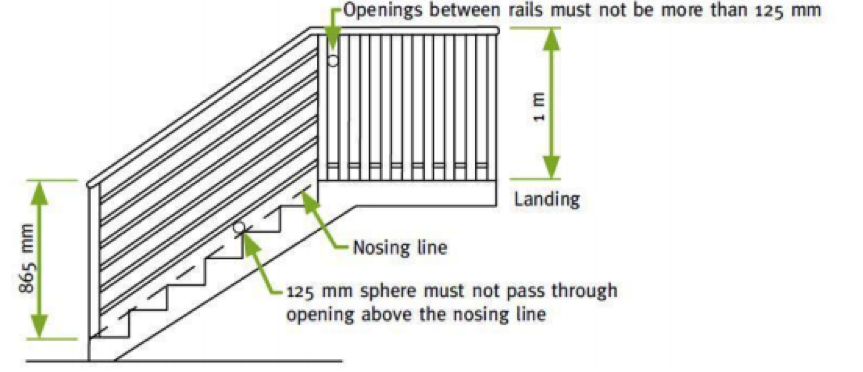
Building regulations in Australia state that balustrades should be a minimum height of 1 metre and have no spacings greater than 125mm to prevent large objects falling through.
For surfaces higher than four metres above the ground must have all of the above conditions must be met with the addition that they cannot have any climbable elements, such as horizontal rails, located between 150 millimetres and 760 millimetres from the floor.
Balustrades on stairs must be a minimum height of 865mm above the ‘nosing’ of the stair tread (see diagram below). Gaps in the balustrade cannot exceed 125mm.
Balustrades on stairs more than four metres above the ground must have all of the above with the addition that must also not have any climbable elements located between 150mm and 760mm from the floor.
Climate
Climate is an important factor to consider when building or installing balustrades especially with Australia’s varying seasons. In many parts of Australia, the construction of new building and additions to existing buildings will be assessed as to whether or not it is in a bushfire-prone area. Additionally, in areas prone to high rainfall, humidity or moisture only Class 1 timbers should be used to prevent rotting.
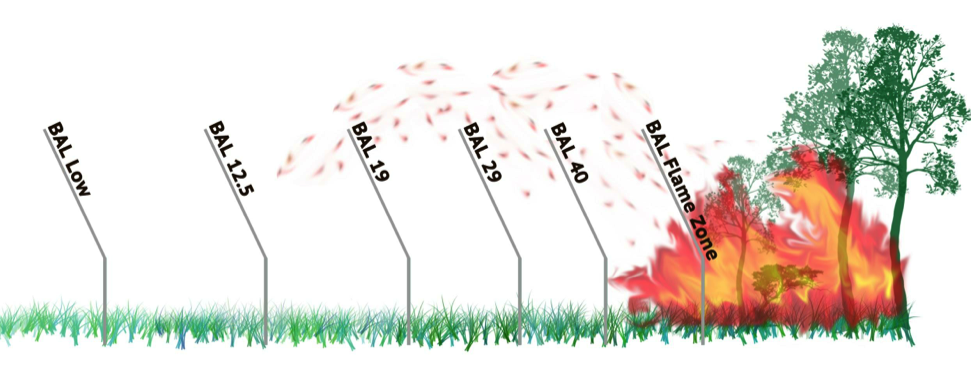
There are six different Bushfire Attack Levels (BAL) for proposed construction and as the threat increases, so do the restrictions on the building materials that may be used.
The safest option is to use metal which, of course, will not ignite and can be used in any of the Bush Fire Attack levels. But if timber is your choice, please be aware that you must use only specific types of timber in the various BAL classifications. For BAL Low – BAL 19 areas only timber with a mass of 750kg/m can be used. In BAL 29 areas, timber with a higher density and ‘fire resistant’ qualities can be used. These include; Merbau (Kwila), Spotted Gum, Blackbutt, Turpentine, Red Ironbark, River Redgum, Silvertop Ash.
In areas BAL 40 and BAL FZ the use of any timber for balustrades is not allowed.
Fire isn’t the only environmental aspect to consider, decks and balconies on properties near the coast can have an even higher risk of potential failure. The corrosive effects of salt, sand and wind can affect unprotected timber and steel structures. Sentrel Australia uses Marine Grade Stainless Steel Wire, which is the most corrosion-resistant material in its class and the safest option for balustrades in coastal areas.
At Sentrel, all of the balustrade specifications for our stainless steel vertical wire with extruded aluminium comply with all Australian Standards. This means that you can rest assured knowing your family is safe while enjoying beautiful Australian designed & manufactured balustrades.
Coastal & High-Exposure Environments
Properties near the coast face accelerated corrosion from salt, sand and wind exposure.
Sentrel systems utilise 316 marine-grade stainless steel cable, offering superior corrosion resistance and long-term performance in coastal environments. Engineered for Australian Standards
All Sentrel balustrade systems — including stainless steel cable with extruded aluminium surrounds — are engineered to comply with Australian Standards for safety and structural performance.
This means you can relax knowing your balustrade is protecting your family while enhancing the beauty and value of your home.
The Australian climate can be extreme, from subzero
temperatures in the south to 40+ Degree (Celsius) heat in the north,
clearly a one type fits all approach to balustrades for your home may
seem impossible. Similarly, Australian’s can often experience 2 or even 4
seasons in one day – with winds and storms capable of making you go
from wearing shorts and a singlet to rugging up in your jeans and a
jumper.
Building your
home to work with your environment is therefore extremely important to
ensure you can maintain comfort and enjoy the best of your surrounding
landscape.
Glass Balustrades
Glass balustrades are most common in external home
environments where encouraging a breeze onto your verandah is not high
on the home owners priority list but being able to enjoy the view is.
Beach side high rise apartments tend to take this approach because the
ocean breeze is often easily encouraged to flow through the apartment or
the breeze can turn into more of a unexpected blustering wind.
Of course the salty air does make owning a glass
balustrade less enjoyable due to having to constantly clean it to keep
enjoying that pristine view. Reflecting sun into your home can also be
of concern not to mention birds often collide with the invisible wall
put in front of them.
What if there was a balustrade that ticked all the
boxes? You could enjoy the view, encourage a breeze through your home,
throw away your glass cleaning products, keep the kids and the grandkids
safe, keep your local fauna a little safer and fit in with the
beautiful Australian landscape.
Stainless Steel Wire Balustrades
Stainless steel wire balustrades have become a very
popular choice for all homeowners looking to achieve this balance.
However the one very important fact remains, is that safety must be put
at the top of the list for any verandah or platform which has more than a
1 metre drop from the edge. Horizontal stainless steel wire balustrades
don’t offer this level of safety and can be climbed by children.
Stainless Steel Vertical Wire Balustrades
Safe, auto-tensioning, low maintenance stainless steel vertical wire balustrades are arguably the best product for any Australian home regardless of the style of home you live in.
This is made possible by Sentrel’s proprietary products coming in both timber rail and aluminium railingoptions.
We think it’s safe to say that many of us would love
to install and forget our balustrades and not have to constantly
maintain their look and their safety.
Sentrel Australia offer both an aluminium and a hardwood rail
option which are almost identical in their makeup but they both mean
that matching the right look to your home is simple.
The aluminium rail and post, vertical stainless steel
wire system is maintenance free. Simply choose your powder coated
colour, install and the self-tensioning wire cables will keep you and
your family safe for years.
The timber option balustrade has the rail and posts made from hardwood and vertical wire cables are easily tensioned. Some settling into your local environment will require you to re-tension wires approximately 1 month from installation but then only annually from there on.
So would you choose Glass or Vertical Wire Balustrade?
Of course we’re going to show some bias to the vertical wire balustrade because not only do we love our product but so do our customers. And to be honest, we hate cleaning and love a nice cool breeze.
Sentrel’s aluminium system is zero maintenance and the timber system will require some re-oiling and re-tensioning, albeit infrequent. Both systems meet Australian standards and have been extremely popular for both rural properties and coastal homes.